Classroom decor has a job to do. It can make a room feel warm, but it should also help children learn. The best walls are not packed with random color or seasonal clutter. They are organized, readable, and connected to routines. A child should be able to look at the wall and find something that helps: a feeling word, a breathing step, a map, a math reference, a safety reminder, a vocabulary prompt, or a question worth answering.
This is the shift many teachers are making now. Instead of decorating every inch, they are building learning stations. A wall can support calm down routines. A bulletin board can anchor geography. A cabinet side can hold safety visuals. A small strip near the whiteboard can become a math fact review spot. Decor becomes useful because it is placed with intention.
Jelly Bean Genius is built around that idea. Products in Educational Decor are meant to be more than cute. They are visual tools kids can return to during the day. When the room itself gives helpful prompts, adults do not have to repeat the same explanations quite as often.
Start with the room's real problems
Before choosing decor, notice where the day gets sticky. Do students struggle to name emotions? Does the class need reminders during transitions? Are map skills weak? Do math facts slow everyone down? Do students ask the same safety questions? Is there a blank wall near a small-group table that could become a reference zone?
Decor works better when it solves a real problem. If children constantly ask where materials go, use labels and visuals near storage. If they struggle to return from big feelings, build a calm corner. If they forget geography vocabulary, put a map where social studies happens. If they need independent math support, place a reference chart at the station where they practice.
Every wall space should earn its place. That does not mean the room has to feel plain. It means the room should feel clear. Kids should not have to visually fight through clutter to find what matters.
Create zones, not decoration clusters
A learning station is simply a small area with a purpose. You might have a regulation station, a geography station, a math helper station, a safety station, and a reading vocabulary station. Each zone has a few visual supports and a routine attached to it. The routine is what turns the poster into a tool.
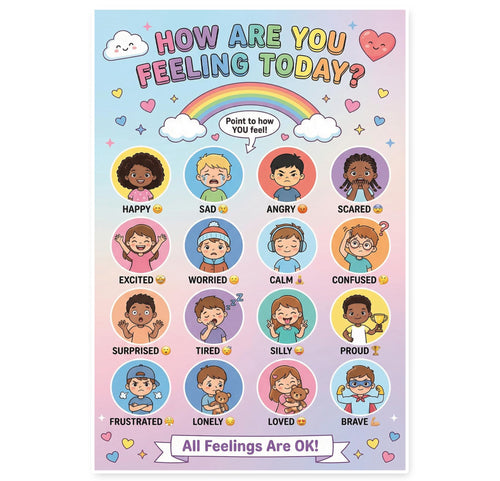
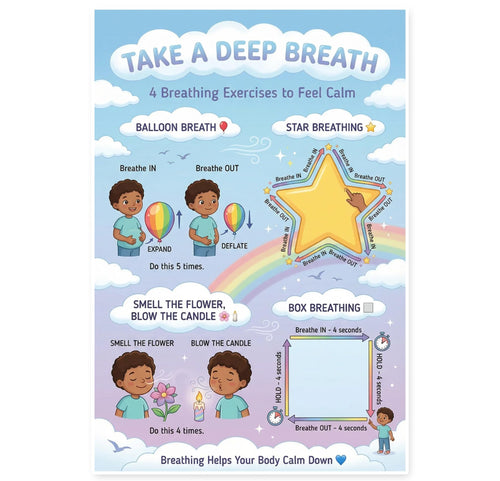
For example, a regulation station could include the 16 Emotions Feelings Chart, a breathing poster, and a timer. The routine might be: point to a feeling, choose a strategy, breathe, return. A geography station could include a wall map, dry-erase markers, and a weekly place prompt. The routine might be: find the place, say the continent, name a nearby ocean or country.
Zones help children know where to look. They also help adults keep the room tidy. If a poster does not fit a zone or routine, it may not belong on the wall yet.
Make visuals readable from where kids stand
Classroom visuals often fail because they are too small, too busy, too high, or too far away. A beautiful chart is not useful if students cannot read it. Before hanging anything, stand where the child will stand. Can you read the title? Can you see the steps? Is the contrast strong enough? Is the poster close to the activity it supports?
For early learners, place important visuals at kid height. For older students, consider desk stations, binder inserts, or smaller reference areas near where they work. A giant wall of text will not help most children in the middle of a task. Short labels, bold headings, and clear visuals usually work better.
Educational decor should reduce cognitive load, not add to it. If a child has to decode the poster before using it, simplify the setup. Leave space around each tool. Group related items. Avoid mixing too many visual styles in one small area.
Use decor for routines you practice
A poster becomes part of learning when you refer to it. During morning meeting, point to the feelings chart. During social studies, point to the map. During math warmup, point to the reference chart. During cleanup, point to the visual reminder. The more students see adults using the room as a tool, the more they learn to use it independently.
Try making a quick weekly wall routine. Monday: one emotion word. Tuesday: one map question. Wednesday: one math fact review. Thursday: one safety reminder. Friday: one student chooses a wall tool and explains how it helps. This kind of routine trains students to see the classroom as interactive, not just decorated.
If you are working with mixed ages, keep the routine flexible. A preschooler may point, an elementary student may explain, and a middle school student may apply the same visual in a more mature context. The same wall can serve different levels when the adult prompt changes.
Choose calm without making the room dull
Calm classroom design does not have to mean beige everything. It means color has a purpose. Use strong contrast for readability, warm colors for emphasis, and quiet space around important information. A room can be cheerful and still easy to scan.
For a calm corner, avoid covering every surface. For a subject wall, avoid mixing unrelated posters. For a hallway display, make the title obvious and the next step clear. When a child glances at a wall, they should know what it is for.
The Calming Corner collection is a good example of purposeful decor. The visuals are there to guide breathing, grounding, and emotional vocabulary. They can brighten a space while still supporting a practical routine.
Build flexible classroom stations
If you do not want to commit to a permanent wall, use portable stations. A binder ring, clipboard, rolling cart, or tabletop easel can hold visuals and move where students need them. This is useful for shared classrooms, homeschool spaces, small-group rooms, tutoring, and classrooms with limited wall space.
A portable station might include a map and marker for geography warmups, a binder insert for math practice, or a feelings chart for SEL check-ins. The important thing is that the tool stays accessible. If it is buried in a cabinet, it will not become a habit.
Teachers ordering for several rooms can also think in sets. A consistent map station or calm corner setup across classrooms helps students know what to expect. Visit Classroom Bulk Ordering or Teacher Discounts if you are planning for multiple spaces.
Shop the learning station idea
To turn walls into useful learning spaces, start with the area that needs the most support. Browse Educational Decor for wall tools, Calming Corner for regulation visuals, and Safety Corner for practical classroom reminders. If you are building by subject, use Shop by Subject to find maps, history, math, science, and computer skills materials.
The best classroom decor is not the loudest thing in the room. It is the thing students actually use. Put the right visual in the right place, teach the routine, and let the wall do some of the quiet work.
Quick FAQ
How much classroom decor is too much? If students cannot quickly find the visual they need, the wall is probably too busy. Keep important tools grouped by purpose.
Should every wall be educational? No. Blank space can be helpful. Choose a few strong zones rather than covering every surface.
Where should calm corner visuals go? Put them near the calm space and close to child eye level. Practice the routine before students need it.
Can decor help older students? Yes, especially when it supports reference, retrieval, routines, and independent checking. Older students may prefer less playful placement and clearer subject organization.
What should I buy first? Start with the routine that needs support most: regulation, maps, math facts, safety, or subject reference. Then build from there.
How to use this this week
The easiest way to turn this idea into action is to pick one small routine and repeat it for five days. Do not rebuild the whole room, rewrite the whole lesson plan, or buy every possible material at once. Choose the part of the day that already needs support and place the visual tool there. Morning warmups, small-group rotations, homework time, quiet reading, and end-of-lesson review are all good candidates because children already expect a routine in those moments.
On day one, model the routine yourself. On day two, let a child help. On day three, ask students to explain the steps back to you. On day four, use the tool with a slightly harder prompt. On day five, keep the tool available and notice whether children reach for it with less adult direction. That simple progression gives the visual a real job instead of leaving it as another nice-looking item on the wall.
If you are teaching a group, write the prompt on the board before students arrive. If you are using the idea at home, put the prompt on a sticky note beside the material. The less you have to explain in the moment, the more likely the routine is to happen. Small routines are where classroom decor starts to feel natural.
What to buy first
Start with the product or collection that supports the routine you will actually repeat. If the challenge is reference and recall, choose a laminated study tool. If the challenge is classroom flow, choose a visual that sits near the transition point. If the challenge is building background knowledge, choose a map or subject chart that can stay visible all week. You can always build out the set later.
Useful internal starting points include Educational Decor, Calming Corner, and Safety Corner. Those pages keep the browsing focused around practical classroom and home use, which is better than collecting random resources that never make it into the routine.
A quick wall audit for teachers
Before adding anything new, take five minutes to audit the walls you already have. Stand at the classroom door and notice what your eye finds first. Is it useful? Is it current? Can students read it? Does it support a routine that actually happens? Then stand where students sit or work. If the most important visual is too small, too high, or too crowded, it may need moving before you buy anything else.
Try sorting wall items into three groups: tools students use every week, displays that celebrate work, and items that are mainly decorative. All three can have a place, but they should not compete for the same attention. Put weekly tools close to the routine they support. Put celebration displays where students can enjoy them without needing to reference them during work. Keep purely decorative items limited so the useful visuals can breathe.
This audit is also helpful for homeschool spaces. A kitchen wall, hallway shelf, or rolling cart can become a small learning station when the visuals are chosen with care. The same rule applies: if the child can find it, read it, and use it during a real task, it has earned the space.
Keep the routine visible
The final step is to keep the tool where the routine happens. Children are more likely to use visual supports when they do not have to search for them, ask permission to get them, or wait while an adult sets them up. Place the tool close to the work, model it briefly, and return to it often. That is what turns a product into a habit.
Do not forget student ownership
Learning stations become stronger when students help maintain them. Assign a weekly helper to check that markers are capped, cards are returned, and the right visual is still in place. Ask students which wall tools they used and which ones they ignored. Their answers are useful. If nobody can explain how a poster helps, move it, simplify it, or replace it with something tied to a real routine.